Showing posts with label board games. Show all posts

Tuesday, July 5, 2011

Introducing Game Night

Recently I've begun implementing a new organization strategy for board game sessions. In the past the process went something like this:

  1. Decide what variety of game I'd like to play. Type will determine the number and type of players I'll invite to participate. Heavy Strategy vs. Light Strategy will often involve a different set of people, and if Party Games are the thing a larger group will need to be summoned.
  2. Invite friends and await response. Actual turnout is critical to implementation of the Gaming Plan. If the appropriate type and number of players can attend, The Plan goes as intended. If condolences are extended, however, the session will either have to be postponed or the content adjusted to those that do show.

This is clearly the top-down approach to game session planning, and though it does often lead to an enjoyable time, there are many instances where guest lists have to be adjusted or different games need to be selected to fit the group.

My new strategy is to plan a game night to which I invite essentially everyone I know that 1) has shown any interest in board games and 2) lives within reasonable proximity of my house, and then commence to play whichever games happen to fit the needs and desires of those that can attend. Advantages to this method are legion:

  • I don't have to limit those invited due to particular gaming plans. The plans are made after people show up and we can determine exactly which titles will be best. 3-4 players probably means a strategy game, 5-8 may mean a party game or splitting up for a couple of strategy games, 9-12 could entail a big game or two of something that handles large numbers of people, like werewolf, followed by some smaller groups playing smaller games.
  • It doesn't put pressure on anyone in particular to attend to have a successful outing. If I invite 3 people to a game night and 2 can't make it, obviously this will derail plans. The basically limitless invite list means that for any given game night a number of people may be busy or out of town and the event itself goes on without missing a beat.
  • It is virtually impossible for me to involve everyone I know who may be interested to regular micro gaming sessions. Game night allows me to invite people who are not in 'the inner circle' (wait...there is no inner circle!) and keep them involved and interested in the hobby. One of my gaming goals is to meet and develop a local group that has a life of its own--ultimately other people independently interested in games, with their own collections, and hosting their own game sessions. I'm still a long way from that Utopian dream, however!
  • Finally, (though I'm sure there are many other nuances that I cannot, or will not, fully enumerate here) game night will hopefully become a regular occurrence that anchors my gaming life. Good company, lots of games hitting the table, and new players being introduced to the joys of board games will hopefully be a hallmark of game nights far into the future.

The Mrs. still doesn't fully understand why I like the concept of a big meet up for board games, but perhaps this brief discussion can better illuminate my motivations. Well, that's all for this time out--happy gaming!

Friday, March 19, 2010

Boards, Cards, Etc.

Recently I've been trying to decide if there is room in my life for more than one gaming hobby.

Board Games


Certainly this is my primary interest in the hobby, and it's a fitting one if it's the only gaming niche in which I participate, largely because of its flexibility. I can pull out a board game to play when I'm alone and want a solitaire game, a two player game to share with the Mrs. or a friend, a strategy game for four or five, a party game for 6 or 8, or a handful of different titles to split up a very large group into 2 or 3 separate tables. A stack of board games can be thrown in the car and played with friends or family on a trip, or a game can tag along to a coffee shop or restaurant and be played over a drink or snack. There are even versions of board games online that I can play with long distance friends and relatives.

Collectible Card Games

CCG's, like Magic: the Gathering, are games in which you buy packs of cards and then build your own deck from the resulting card pool. Each player that plays constructs their own deck and uses it to play against others that have done the same. Magic is an amazing game, although keeping up with it is immensely expensive, and actually maintaining competitive decks would be even more so. Even so, the huge card pool that has been released over the years gives the game a huge amount of variety, the strategies are numerous, there are hundreds of different ways to play and thousands of ways to customize your style of deck and of play.

If taken just in a limited setting, Magic can fit in the board game world. I could simply take a stack of the cards I own and draft decks using that particular pool of cards with a number of friends, and then play. Magic is certainly best, however, when there is a large group of people playing in an area and many people building different types of decks and offering various styles of play. This is not really the case right now in Canton, so it's difficult for me to be involved with the game at all, though it has meant I've been able to fully concentrate on pursuing my board game interests. Ideally I'd be able to have some board game friends that were also into Magic so that I could stay plugged into that scene a little as well.

The Rest

I have given a little thought to playing a role playing game (RPG) at some point. I think it's something I'd devote a little time to if I happened to find an awesome group that inspired me to do so. I would say it is an ongoing interest of mine, but not something that I'd be willing to get off the ground myself. I did play a little Dungeons & Dragons long ago, but the group was not very interesting, and the DM not very ambitious.

I also rather enjoy video games, but I've now owned Okami for the Wii for a year, and despite loving the game, I just don't find enough time to play. Not that the pastime isn't enjoyable, I just choose to play the board game first every time.

Collectible miniatures have never really interested me all that much--they eat time & money just like M:tG, and I really don't have the same spark of interest in them as in collectible card games, so I think I can do without. I do have a Heroscape Basic Set, which is somewhat of a cross between board games and collectible miniatures, so I may end up pursuing that a little anyway.

Live Action Role Playing (LARP) is another part of the hobby I've never pursued, though many of my friends in the Burlington area did (and still do, so far as I know.) Not that the idea isn't quite intriguing, but I just don't see myself devoting that amount of time in another undertaking.

Massive Multi-Player Online Role Playing Games (MMPORPGs) like World of Warcraft are immensely popular right now and I bet they would be a riot to play. They strike me as immersive and quite entertaining, but again, when played to their potential, these types of games don't really leave much time for other pursuits.

Well, that's probably enough babbling for now. Keep playing!

Monday, March 8, 2010

My 4 Favorite Types of Games


Honorable Mention--Kids' Games
One of my favorite ways to interact with my children is through playing board games. Why is this only an 'honorable mention' then? For the most part these games are difficult to compare to the vast array of games I play with adults since they are primarily designed for kids. So, though I may enjoy playing some of our kids games just as much as the other games in my collection, it is very difficult to rate them on the same scale.

Not only do we own a decent handful of good kids' games, but Abby is old enough now that I can play many lighter adult strategy games with her as well. If we only have time for a short game I'd probably reach for Cheese Snatching, a cute little push your luck game by Haba. If the whole family wants to play, either Suitcase Detectives or Chicken Cha Cha Cha would probably fit the bill. If it's just Abby and I and we have a little time to spend, I'd probably go for Carcassonne, which we both love and that title even scratches that strategy game itch.

4. Heavy Strategy Games Games in this category often have complicated rules, many difficult decisions, and take several plays to really get a firm grasp of the rules and a feel for some of the strategies involved. Though I admire the designs of all the heavy strategy games I own, they have been somewhat hit or miss as far as my enjoyment goes. I love Puerto Rico, Agricola, and Race for the Galaxy (RftG), but thus far games like El Grande and Caylus just haven't clicked for me.

Heavy strategy games tend to rely very little on luck so all the hard work and tough decisions that one makes along the way tend to culminate in an appropriate outcome--if you've played the best game, you are almost certain to win. Strategy games in general tend to function best with a small number of players, tending to play best with 2-4 participants (a number that does not function well for party games in general). There is a lot of work to be done in these games, but a good job is very well rewarded with victory and satisfaction. With the right group of players who have all played the game a number of times and each of whom is thinking independently and pursuing diverging strategies, these types of games have no equal.

There are a number of potential downsides to heavy strategy games, however.

  1. Many people don't want to have to think that much about a board game, especially if they are playing one to relax after having to think all day at work, and therefore it can be difficult to find people who will willingly play them!
  2. They feature very steep learning curves. The rules are often somewhat difficult to understand, and even once you have a grasp on the basic idea of how to play you still have little to no idea how to form an effective strategy. A couple of experienced players teaching one of these games to newbies will have a huge advantage, and it will generally take many plays before the playing field is somewhat level.
  3. Heavy strategy games are all about making many tough decisions and thus players must spend most of their time and energy during the game thinking. This tends to make for fairly quiet gaming experiences. There's nothing inherently wrong with this, of course, but often it is nice to have a more lively gaming experience.
  4. If you have a large group of people on hand you just can't play one of these games.
  5. Heavy strategy games tend to take a fairly long time to play, especially with a larger number of players and/or a number of new players. Agricola, for instance, plays in about half an hour per player--that's 2 1/2 hours for a five player game, plus time for rules explanation if it's anyone's first play. While I have no problem with this, it can be a hurdle to getting other people on board.

3. Party Games
These are essentially the opposite of heavy strategy games in almost every way, yet I like them just as much! My favorites (as described in my previous post) include Time's Up: Title Recall, Ca$h'n Gun$, Say Anything, and Wits & Wagers. Two that have potential but for which I harbor some reservations are Dixit and Cluzzle.

Party games have a lot going for them. They tend to be very highly interactive, easy to teach, generally accommodate large groups (at least 6-8 players), and tend to favor creativity or lighthearted fun over difficult decisions.

On the flip side, party games have a weaker connection between making good decisions and victory--quite often the victory conditions are just a guide to maximizing the fun factor along the way. If you're looking for a game that will challenge you at every turn and will culminate with a victory if you've had the best strategy or made the best decisions over the course of play, you should avoid party games! Also, the flip side of the 'accommodating large groups' feature is that party games simply don't work with two players and are not optimal for small groups of three or four.


2. Light Strategy Games
These are much like the heavy strategy games above, but tend to be somewhat more dependent on luck, easier to learn, have simpler strategies, and play in much less time. My favorites in this category are Carcassonne and Dominion, though I also enjoy a host of others including Metropolys, Wasabi!, and Settlers of Catan.

Light strategy games are a good middle ground between heavy strategy and party games. They are much more accessible than the former, and still have more strategic elements than the latter. New players have a better shot at winning than they would with heavier games, and really have the opportunity to have more fun with them almost immediately. These also tend to play in much shorter amounts of time than their heavier equivalents, so it may be possible to play two or three games in the same session as opposed to one.

1. Cooperative Games Though I really only own two games in this category (Pandemic and Ghost Stories), they are amongst my favorite games, and I do intend to add more to my collection in the near future.

Coops place much less pressure on new players than competitive strategy games since they don't force each participant to make all their own decisions and come up with their own strategy independently of the other players. It is also less important to give a complete explanation of the game before play, because there is no harm in teaching some of the rules as the game is played. This being said, Pandemic and Ghost Stories are both very challenging games that demand much thought for players to be victorious over the game, the pressure is simply off individual players to be fully responsible for the entire strategy.

These games succeed when they throw down the gauntlet and players have to brainstorm together to come up with creative ways to combine their abilities and game options to be able to deal with the situation on the board. These lively debates are the real core of the game, and it is possible for the session to suffer if a couple of the players just aren't into it. Also, some gamers might just not get the point of playing a game when there is no winner crowned in the end. For me, there is a place for each of these types of games, but most recently the majority of my favorite gaming experiences have been with cooperative ones, and thus they make the top of the list.

Anyone find it odd that my last post made a big deal about only being able to come up with lists of four, but I follow it immediately with a list of five? Lame.

Sunday, February 21, 2010

When the Mrs. Goes Away: Agricola


Agricola
(Sunday, Monday, Saturday)

Agricola is a farming simulation game in which players take on the role of a fifteenth century farming couple. Your goal is to build and develop your farm to be the most advanced and well balanced one amongst those playing. Okay, so how do you accomplish this?

Agricola belongs to a category of titles called 'worker placement' games, which means, in Agricola's case, that each player takes turns using one of their family members (the workers) to claim one of many action spaces on a game board. When chosen, each of these spaces gives that player an opportunity to better his farm in some way. For instance, particular spaces might allow you to:

  • receive a load of wood (which can allow you to later build fences or an addition to your house)
  • renovate your home from a wooden shack to a much more prestigious clay hut!
  • add cattle to your farm (though you best have a fenced-in pasture to contain them, or at very least a cooking hearth to make use of them before they run away!)
  • plow a field, or sow some wheat seeds into an already plowed field
  • have a baby!
Each player begins a gaming session with exactly two family members--the farmer and their spouse. As the game progresses opportunities to grow your family will arise, allowing each couple to have up to three children who will naturally be expected to help out on the farm, and thus increase the number of family members available to choose additional actions on the game board. Hey, farming life is difficult--once little Tommy can walk, gosh darn it, he should be able to plow the fields and mend the fences!

Though Agricola is very much a thinking game with some very deep strategy, it succeeds over other games that may be so described in a number of ways:

  • The complexity of the game can be varied to a great extent. Some of the great variation and replayability of Agricola lies in the decks of cards that allow players to build 'minor improvements' and take on beneficial 'occupations' over the course of the game. These cards can either be omitted to simplify the game (useful especially when teaching the rules to new players), or upgraded to more complicated and interactive cards when players are ready to up the ante.
  • A player's progress isn't recorded in terms of generic 'victory points' (as in Caylus or El Grande) but rather in tangible farm improvements. It is especially helpful and rewarding for new players to see their progress advance by having a couple of fenced pastures, a plowed field, some sheep, or a new addition to their house, rather than 'oh joy, I now have 27 victory points!'
  • Agricola has a very strong theme that keeps players interested in the game. All the mechanics seem to fit the theme very nicely so it really feels like you are developing your farm:
  1. One grain sown into a plowed field nets you three grain over the course of several rounds.
  2. Owning a pair of any given animal results in a baby animal of that type at the end of each round.
  3. Adding a room onto your wooden house costs you five wood resources (for the walls) and one reed (for the roof).
  4. For you to increase the size of your family you first need to expand the size of your home.
  5. To hold more than one animal on your farm (one can stay in your house as a pet!) you need to build a stable or fence in pastures.
As I mention above, however, to succeed at Agricola you need to master a great deal of strategy. Those who have more experience at the game will generally have a great advantage over new players. The three games I played last week were all won by those who had played the game previously, and always by large margins. I had probably half a dozen games under my belt beforehand, and won two of the three contests. David, the only other board game enthusiast amongst the players, and the only other to have played Agricola previously, won the remaining game. Though the game has been a lot of fun to play thus far (and not just because I've been winning!), I would imagine Agricola will be even more rewarding once some other players get a few more plays in and really start to even the playing field.

Tuesday, January 12, 2010

Games in 2010

Thus far in 2010 I've had several opportunities to get board games to the table. I tried Pink Godzilla for the first time with Trevor, Ghost Stories online with Tom and in person with Sarah and Zach, and a bunch of party games with a group of eight.

Pink Godzilla

Trevor and I were able to meet up in Worcester, MA while I was attending a brief culinary conference at the College of the Holy Cross. He brought Carcassonne and Pink Godzilla, though we only had time for a play of the latter. The game pits players against one another as rival video game designers attempting to program the best and most elaborate titles. Although fairly light and quite random, there are a few interesting mechanics in Pink Godzilla, and enough strategy that I would gladly give it at least a few more plays. The powerful cards can certainly come up at times that makes it much easier for one player to gain the advantage, but there are tough decisions to be made as to which cards a player keeps in his hand and which he gives his opponent the opportunity to steal. An auction mechanic for the commonly available cards on the table also plays a part in reigning in the random aspects of the game.

Ghost Stories

I am up to perhaps 5 or 6 plays of this excellent cooperative title, yet have only been victorious once--last night with the Mrs. and Zachary. Though we seemed to be overwhelmed by ghosts fairly early in the game, we were somehow able to hold them off just long enough to get a chance to face Wu Feng, who happened to be the best possible incarnation for our situation at the time of his arrival. Zachary died just before the incarnation was drawn, but the Mrs. and I were both in ideal positions with the right mix of Tao tokens to secure victory. Tom and I have played several 2-player games of Ghost Stories but victory has thus far eluded us. I recently read that the 2-player game is the most difficult to win, so perhaps that is not that surprising. I feel that I've mastered most of the rules at this point, although there are still a couple of gray areas. Ghost Stories still feels like a very similar game to Pandemic, although very differently themed.

Party Games

The Mrs. and I hosted six guests last weekend for games. We played Bananagrams (the Mrs. and I for the first time), Pit, Time's Up: Title Recall, and Say Anything. I would say Zachary and Chris were the two best at Bananagrams (with Rosa close behind), and I was perhaps the worst, only really being in close competition for one of our 8-10 plays. Pit was frantic and fun, though very light on the strategy. We found that since the bear and the bull tend to pull scores down each round, that it actually takes quite a while for anyone to build up enough points to secure the victory. The rules suggested playing to 500 points, but since we were eager to play other games we cut that down to 150, which is a good thing since even that score took quite a while to achieve. Next was Time's Up which has become our favorite party game, although the Mrs. has proven to be much better at it than I, a fact further proven by her and Zachary mopping the floor with the rest of us at the game (although Zach himself is a theater professor, so he perhaps has a natural inclination to be good at charade style activities!) Say Anything rounded out our night and wasn't begun until past 11:30 pm, so people must have been having a good time to be up for yet another game that would take us into the new day to complete. As usual, the game did not disappoint. It is essentially Apples to Apples but with slightly deeper scoring and much more creativity.

Here's hoping for much more frequent boardgaming in 2010!

Saturday, April 11, 2009

Sizing Up My Collection: The Rest

The only games in my collection left to cover are the odds and ends: filler, party, and abstract games.

Party Games

Wits & Wagers
16 plays
8/10

This is a great game that works well with almost any group of people. There is a little strategy, but mostly it is a light party game and a lot of fun.

Say Anything
8 plays
7/10

Say Anything uses a few of the same mechanics as Wits & Wagers but comes across as a completely different game, almost a half-way point between Wits and Apples to Apples. Whereas Wits & Wagers forces quick play through its timer, Say Anything can drag a little if players aren't really getting it. The game definitely needs to be played quickly and not too seriously to be fun.

These two games have certainly convinced me that party games are a good idea, and I can see owning several more, though perhaps not in the near future.

Filler Games


For Sale
6 plays
7/10

Really my only filler (unless you count Dominion, which is close), For Sale features interesting decisions in a light, quick-playing auction game. The Mrs. doesn't like it, so perhaps it won't be useful as a filler after all. I wonder, though, if she would like any filler, or if they're just too light for her.

Abstract Games


Blokus
6 plays
7/10

I like Blokus enough, but I have yet to play it 4-player where it is supposed to be very good. Still good with 2, but since neither the Mrs. or I are that into abstracts, it rarely gets played. I suspect that I may grow to enjoy it more, but I'll need many more plays and the right group of people.

Well, that does it for my designer board game collection. In the coming days I'll most likely think about these games a little more and put together an updated board game wish list.

Sizing Up My Collection: Light Strategy
Sizing Up My Collection: Heavy Strategy

Friday, April 10, 2009

Children's Games: Scrabble Junior

One of my new projects on Splitting Eights is to play through all of the children's and family games I own and talk a little bit about each. I'll be including any thoughts Abby has on the game as well, so between the two of us readers should be able to get a feel for what makes each game interesting and fun, or, as the case may be, not so much.

Scrabble Junior (The Disney Edition)
Ages 5+
2-4 players

Abby asks to play this game rather frequently. She likes that the board is two sided so you can alternate the sets of words to spell during the game, and particularly enjoys getting to collect the little scoring chits each time she finishes a word. She does get rather frustrated that each turn you have to pick new letters randomly and keep them even if they are currently useless in the game. Abby would much prefer to keep picking letters and putting them back until she draws the ones that are actually useful to her.


I'm still not sure exactly how I feel about this title. You do spell out words as the game progresses, so I suppose that is a good feature for children, but all the words are pre-printed on the board and thus players don't have to think about the spelling, they merely have to match the letters in their hand with letters on the board. Sometimes you'll be able to withhold playing certain letters so that your opponent cannot finish some words, but more often than not you'll only have a couple of legal moves and thus have to set up the other players to gain points. Through much of the game there is a feeling of not being in control, which is a bit frustrating. I'd like if the game could be more free-form, allowing players to create their own simple words (more like Scrabble), but I'm not sure how that would work when children and adults played together.

I'd say this is a middle of the pack kids game. Abby enjoys it and I don't mind playing it with her, but it wouldn't be one of the first I'd reach for if I were picking a game.

Wednesday, April 8, 2009

Sizing Up My Collection: Heavy Strategy

In my last post I reviewed the light strategy portion of my collection. This time I'll tackle a somewhat smaller set of games: my heavy strategy board games. What you will not find here are kids' games and 'classic board games,' the former of which will get studied in future posts and the latter, while I still do enjoy playing them occasionally, are not a central part of my collection.

Heavy Strategy Games

Fury of Dracula
5 plays (mostly 2-player with one 4-player game) I don't think this is best with 2.
8/10 Very initial rating, could certainly change w/a couple more plays.

Fury of Dracula features some very interesting mechanics especially those involving Dracula's movement system and his hidden trail. I like the deduction element here, but the real key to the game is the heavy theme. The game falls a little flat for me with 2-player simply because the theme feels weakened. Rather than a group of heroes combing the countryside for the elusive Count, discussing strategy, perhaps stumbling a little with miscommunication, sharing moments of both frustration and elation, 2-player is a bit more cerebral, chess-like if you will: quiet, contemplative. I just don't feel that sense of adventure when one player is forced to control all four hunter characters. Fury of Dracula needs several more multi player games before I can really rate it.

Agricola
5 plays (all 2-player)
8/10

This one I do enjoy playing with two, although, as with most of my heavy strategy games, it really needs to see some plays with different groups of people for me to grasp where it fits within my collection. The farming theme is fun, and the worker placement mechanic works rather well here.

Puerto Rico
2 plays (both 2-player)
10/10

Just tried the 2-player variant this year, and it is surprisingly enjoyable. I love this game with 3 or 4-players, in fact it may be my favorite board game. I've probably played this one 20 times overall (mostly in previous years), so I know it is a great game and probably the key title amongst the heavy strategy games I own.

Caylus
1 play (2-player)
5/10

Thus far I've not cared too much for Caylus. It is a very dry, quite heavy resource management game, and generally as I move through the actions of the game I don't feel as if I'm accomplishing anything, but rather just going through the motions. Caylus is a very well designed game from a technical standpoint, as there are many mechanisms that mesh together beautifully, and I can certainly see the potential for a great game here. It is certainly possible that I'm still overwhelmed by all the information and difficult choices in the game, and maybe, just maybe when I grow a little more comfortable with it I will enjoy Caylus much more. Thus, it needs more plays.

El Grande
0 Plays
8/10 Could certainly be higher with more plays.

I've only played this one three times total, two of which were 2-player learning games. So, although I think this is a great game, I really don't have the play time to get a good feel for it. I can easily see this being a perfect 10 game and a mainstay of my collection, but not until I start getting some of these heavier games to the table more frequently.


Where To Go From Here

Really there is a ton of potential for great multi player games on this list. With the exception of Caylus and to some extent Agricola, these all work much better with more players, so exploring these current titles will be plenty to keep me busy during multi player sessions. My next purchases in this category will almost certainly be focused on heavy games best (or only) for 2-players. Right now I'm looking at Twilight Struggle, 1960: the Making of the President, and War of the Ring, all heavy 2-player games. I'm not sure what the Mrs. will think of the card draws in the first two games and the dice in the latter, however.

Next up: party, filler, and abstract games.

Tuesday, April 7, 2009

Sizing Up My Collection: Light Strategy

I've purchased about ten new designer games this year so far (let's see...Pandemic, Dominion, Agricola, Memoir '44, Fury of Dracula, Wits & Wagers, Say Anything, For Sale, Neuroshima Hex!, and Wasabi!) This is in addition to several titles we acquired at Christmastime, so my collection has seen explosive growth through the first three months of this year.

It's been better than a month now since my latest influx of new games, and since I've been experiencing a little gaming downtime over the past week or so I figure it's about time to take stock of my collection and decide where to go from here. I'd like to sort through my board games and detail my opinions of each, estimate how many plays they've seen this year and whether I feel they've been underplayed, and size up how they fit into my collection as a whole. Ultimately this post should detail which games I already own that need to see more table time, and due to weak spots in my collection, which games I'd like to purchase later in the year.

For each game I will list:

Its title,
# of plays it's seen this year,
my current numerical rating, and
some of my thoughts on the game.


Core of My Collection: Light Strategy Games

Pandemic
22 plays (about half in person, half online) Hits the table enough.
10/10 I had rated this a 9 for some time, but it is just too good to not be a 10.

I've played Pandemic live with 2, 3, and 4 players, as well as solo and online. It works well in all these scenarios, although my favorite is 4 player live. More roles in the game leads to more interesting strategies, and more people playing makes for a more entertaining shared experience. An essential part of my collection, Pandemic makes it very likely I'll buy another cooperative game soon, as well as the forthcoming expansion Pandemic: On the Brink.

Dominion
18 plays (vast majority in person 2-player, one 3-player, and a couple online) I'd like to get in more live 3 and 4-player games.
9/10 Just a little too light and quick to be a 10, perhaps.

Primarily I play this with the Mrs. as a 2-player game, and it works rather well in that capacity. I'd really like to teach this one to more people so we could get some regular multi player games going as well. Another essential game in my collection. Will be expanded by Dominion: Intrigue later this year.

Settlers of Catan
15 plays (mostly online)
9/10

A classic and one I still enjoy playing on a regular basis. Probably the game I would be the most worried about overplaying and getting sick of, Settlers has held up to many plays remarkably well. The Cities & Knights expansion needs to get to the table soon, we have yet to play an entire game of that.

Neuroshima Hex!
14 plays (3 in person, the rest online)
8/10

I really enjoy this one, but still have a lot of plays to log before I can cement my opinion. Live I've only played it 2-player and not many times. Online I've played with both 2 and 3-player, although with 3 it seems especially chaotic (in a bad way). I would like to play 4-player team mode, since that seems like it would be the best multi player scenario.

Metropolys
10 plays (2, 3, and 4 players) Scales fairly well to 2-player, but cleaner and more interesting with 4.
7/10 Needs more plays, especially with 4 players.

A game I enjoyed immediately, although I've soured on it a little, mostly because it is a bit more abstract than I'd like. I think it is a solid game, so I would like to get it to the table a bit more. Awesome components and clever mechanics make for lots of potential here, but I'm not fully sold.

Carcassonne
9 plays (one in person, the rest online)
9/10 I love this game, if I played it more often I might rate it a 10.

Certainly one of my top games: simple to teach, lots of good expansions, potential to win through conservative or aggressive play. I need to find more opportunities to play this one in person, but it's quite enjoyable online too. I have yet to play the Traders & Builders or Princess & Dragon expansions nearly enough, and whenever I'm able to start getting this to the table more often I'll pick up the more recent Abbey & Mayor.

Alhambra
8 plays (all 2-player in person) I need to give this game a chance with 3 and 4 players as well.
6/10 A little too light and the mechanics don't mesh well. Also, needs more plays to cement my opinion.

A game I've played exclusively with the Mrs. I feel the mechanics are a little disjointed. The game is fairly fun, however, and I will seldom turn down a game if the Mrs. would like to play. I do need to give this a chance multi player as well. Has the potential to be a keeper, but the jury's still out.

Memoir '44
5 plays, all 2-player
7/10 Needs more plays.

Seems like a solid game, and certainly fun. I haven't played it enough to get a good feel for the system, and to see if the luck of the draw/roll evens out after a few games. Not in a rush to buy more war-themed games until I give this one more of a shot.

Carcassonne: the Castle
4 plays (all in person)
7/10

Played this one exclusively with the Mrs. She's not that high on Carcassonne in general, so it's unlikely I'll really break this one in until I have more 2-player opportunities with other people.

Wasabi!
3 plays (all in person & 2-player)
3/10 Subject to big increase if I can manage to make it play quickly with less deep thought!

Thus far the weaknesses of Wasabi! seem to overshadow the strengths. While it seems that this should be a light fast-paced tile laying game with cool theme, thus far it has come across as plodding and dull. I think for this one to be fun it needs to be fast and light-hearted, but there is so much going here between tiles on board, tiles and recipes in hand, and special action cards, that it is tough to make quick decisions. The result is a game with light depth and heavy attitude--not a good combination. Obviously this is an opinion after very few plays, so I'll need to get this to the table more and try to play it in a way that will actually be fun.

Lord of the Rings: The Confrontation
0 Plays
8/10

I rather enjoy this reimplementation of the basic Stratego mechanic. As in Carcassonne: the Castle, it doesn't get play time because my primary 2-player opponent doesn't care for it.


Summing Up

The core games in the light strategy portion of my collection are Pandemic, Dominion, Carcassonne, and Settlers of Catan. These are games that, for the most part, I've played often with a variety of different people and I very much enjoy. If I were only able to keep these four games and had plenty of people who were up for playing them, I would still be pretty satisfied.

The rest of the games here range from games I know I like but need to play more (Lord of the Rings: The Confrontation, Memoir '44, Neuroshima Hex!) to games I somewhat enjoy but need more plays to determine if they're keepers (Metropolys, Carcassonne: the Castle, Alhambra) to the ugly duckling that has potential but thus far looks more like a flop (Wasabi!)

It is becoming increasingly clear that the Mrs. prefers heavy 2-player strategy games, so I'm leaning away from buying more light 2-player offerings. Instead, I'll probably look to pick up a few more good multi player games in this category. Also, as I mentioned above, another good light coop would be great; at the moment I'm leaning toward Space Alert or Ghost Stories. Finally, I will probably acquire a couple of expansions this year for my favorite light strategy games: Pandemic: On the Brink, Dominion: Intrigue, and Carcassonne: Abbey & Mayor. Neuroshima Hex: Babel 13 might make this list if the base game gets a lot more plays over the next few months.

Next up: considering the rest of my collection (heavy strategy, filler, and party games).

Wednesday, April 1, 2009

Familiarity vs. Burnout

I find that I enjoy a game the most once I've grown familiar with it after repeated plays. There is somewhat of a breaking in process during which I read the rules, play a trial game to iron out any ambiguities, then over the course of time hopefully play the game with many different people. As I explore the strategy space of the game in question and build up experiences playing it with different groups of friends I gradually grow familiar with it, which in turn increases my overall satisfaction with the game.

Playing Them All is Not Enough

Many hobby board gamers seem to buy games at a much greater rate than they can play them. Recently this has been somewhat true for me as well, since I've purchased a ton of new games during the first three months of the year, the difference being that I have managed to play every one of them so far. However, I have certainly not grown familiar with the vast majority of my games, so although I've played every title I own I still feel the majority of my collection is vastly underutilized. My games are underplayed due to a variety of reasons: complicated games because most of my gaming friends are new to the hobby and I don't want to overwhelm them, multi player games because much of my game time is spent 2-player with the Mrs., and some games simply because I don't care for them as much as others and I haven't grown into them yet.

Building a Collection of Group Classics

Another part of this phenomenon is the concept of shared familiarity. When visiting friends it is nice to have a number of games in my collection that I can pull out and play with everyone already knowing the rules, everyone having a common history with the game, perhaps including memories of past victories and defeats, and thus being able to jump right into playing and having a great time. To get to this point each game needs to see a certain amount of table time with any given group of friends, and thus not simply becoming familiar to me, but also to the entire group. The game that falls into this category the most amongst my friends is Settlers of Catan. I've introduced the game to lots of my friends, playing it many times with the majority of them. Another game that is getting to that point is Pandemic. Lucy stopped by the other day for a quick game, and since the Mrs. and I have already played the game with her a couple of times we could set it up and jump right into saving humanity.

Now certainly there is something said for both learning and teaching new games, both of which need to be done before that common familiarity can be achieved, and I'm sure I'll continue to expand my collection. My goal, though, is definitely to have a vast collection of games, most of which have become familiar favorites throughout my gaming network of friends.

Walk the Line

An unfortunate correlation to this discussion is the risk taken as a particular game gets played many times that people will begin to get burnt out on the game. Certainly there is a fine line between familiarity and burnout, although since I own quite a few games it should be fairly easy to steer myself away from going over that line. However, I find that as I put in the necessary plays to grow comfortably familiar with a game, the Mrs. in particular is gradually getting bored with it. She has gotten to that point with Settlers of Catan. So when different people in a group approach that burnout point at varying rates, that could be a difficult issue to resolve. In this case, where I enjoy having a feel for much of the strategy in a game, she is primarily interested in learning new strategy and gets bored very easily as she gets to that point where she doesn't feel she needs to learn any more. I suppose one solution here is for me to focus on those games at which she is tiring when I play with groups that don't involve her. This, however, is rarely the case since I enjoy playing games with her and try to include the Mrs. in almost all my gaming activity.

Thursday, March 26, 2009

7 Excellent Online Board Game Resources

I'm sure there are hundreds of board game themed websites, blogs, podcasts and the like, but the following are my personal favorites. If you think I'm missing out on some great ones, by all means drop me a line!

  1. Board Game Geek If you have anything more than a casual interest in board games you owe it to yourself to visit this site! The most extensive compilation of board game knowledge on the web, board game geek has pictures, reviews, rules, strategy tips, discussion, and news about almost every board game ever. The two features I find most useful: 1. User-voted "best with __ number of players" goes beyond the publisher suggested number of players to tell you a game's sweet spot. Just because a game says it supports 2-5 players doesn't mean it scales well along that range. 2. Especially for popular games,BGG acts as a compilation of user reviews. Being able to read 15 reviews of a game rather than one goes a long way toward accessing how much you might enjoy one particular title.
  2. Yehuda is a gentleman who authors a board game blog out of Jerusalem, Israel. He engages in lots of deep thinking about board games, so many of his longer posts will keep you thinking for quite some time. He also maintains a thoroughblogroll of current board game blogs, which is certainly a valuable resource and much appreciated.
  3. Skip Maloney: The Board Game Examiner Skip is a contributor to Games magazine and has been writing about games for quite some time. This experience shows, both in his excellent writing and his vast knowledge of board games. His site features reviews of many types of games from strategy to word to party games, and insightful commentary about the hobby.
  4. Tom Vasel: The Dice Tower Tom is a missionary, a math teacher, and has a wealth of knowledge about board games. He co-hosts The Dice Tower podcast with SamHealey , produces a video podcast, has written hundreds of board game reviews, and more recently begun to tape video reviews of board games. Certainly Tom is one of the most visible members of the worldwide board game community.
  5. Scott Nicholson: Board Games with Scott Scott produces excellent video reviews of board games. The production values are great and most of his reviews are very thorough. If you want to take a look at gamecomponents and see examples of play before you buy a new game, definitely check to see if there is an episode of Board Games with Scott about the game!
  6. Board Game News This is a site I've only begun to explore. Numerous contributors to the site author articles covering all aspects of the hobby. Also,BGN maintains a page called 'Gone Cardboard' that keeps track of all board game releases that have been announced for the coming year.
  7. The Spiel - Stephen Conway & Dave Coleson I just listened to my first episode of this excellent podcast yesterday, and boy was I blown away! The production values here are just tremendous: so good in fact that The Spiel would not feel at all out of place on mainstream radio (except for the geeky subject matter, of course). The hosts are extremely knowledgeable, well spoken, and enthusiastic. Some of their game reviews are so thorough and descriptive that I could almost skip the rules and dive right in to playing the game in question.

Tuesday, March 24, 2009

Better as a Video Game? Part II

My first post in this series detailed an amazon.com review of Tide of Iron that seemed to suggest board games in general are dated because the mechanics are more easily implemented in a video game setting. This review seems extreme, but I hear more qualified versions of this sentiment fairly often. To a reasonable person who actually enjoys playing board games, when might certain games be more suited to a video format?

Case Study: Cities & Knights of Catan

I'll cover three answers to this question and how each pertains to this one particular title. A board game may be better as a video game when:

  • setup is extensive when compared to the actual value of game play, or
  • particular mechanics or housekeeping functions are tedious or repetitious, or
  • the game isn't heavily played or well known by the players and thus much easier to play when led by a computer program.

Setup Time


Jennie has mentioned that she has friends that enjoy playing Cities & Knights of Catan online, but refuse to play the physical version of the game. Part of this is due to the basic setup time of any Settlers of Catan game: the board has to be randomly constructed, several decks of cards shuffled, game pieces removed from their storage bags, and finally opening placement of settlements (and cities as the case may be) and distribution of initial resources. Any game that requires several steps of setup will certainly play faster in video format, so if fitting in a quick game is one's primary goal the computer version has the upper hand.


Bits & Pieces

Cities & Knights also has many more cards, pieces, rules, and special situations than vanilla Settlers. As in the base game, resource cards must be dealt to players at the opening of each turn, but in Cities & Knights commodities and three different categories of progress cards are also distributed. In C&K players need to track which types of knights they have on the board, whether those knights are activated or not, which player has the most knights, progress of their city developments, a host of incoming progress cards, the robber and the merchant pieces (the latter of which tends to move very frequently), differing hand sizes due to city walls, when to place Metropolis pieces, 'Defender of Catan' cards, and other assorted mechanics and bits of information. I will not concede that all of this bookkeeping, card drawing, and piece tracking is reason to only play the video version of the game, but it does contribute to that argument.


Complexity as a Barrier to Play

A third angle at which to look at this game is its difficultly to get to the table. I own the board game and have yet to play a full game of it in tabletop form, both because I've yet to fully grasp the rules and since the game's complexity is such that I will only introduce it to players already quite familiar with Settlers of Catan.

I've played the online version probably 10-15 times, and because of the structure of the computer program I have yet to master the intricacies of some of the mechanics, especially the special abilities and movement of knights. The computer notifies players when knight abilities are available, and then only allows legal moves. It's impossible to use a knight improperly in the video game, whereas in the board game I'm not only unsure about exact legality of a move, but I might not even realize everything a knight can do, and thus won't even notice I'm missing important options.

Another reason C&K never hits the table is that it can really only be played by those that already fully understand the base game. Very few of the people I game with locally have played Settlers enough times that I feel prepared to add on the extra complexity of Cities & Knights. I am much more likely to introduce a new mid-weight game such as El Grande or Fury of Dracula, as I feel teaching those games from scratch is easier than adding lots of new complexity to a game players are just beginning to understand. Perhaps Cities & Knights online will allow me to teach the game more easily and thus ultimately result in more tabletop plays. We will see.


Wrapping Up

Cities & Knights of Catan is one instance where it's been suggested the online video game port may be a better implementation of the game than the original tabletop version. Though there is no conclusive evidence, and how one views each of the three major points discussed in this post is certainly still subject to personal preference, I'm willing to concede the legitimacy of the argument in this case. There is no reason why someone who plays fairly deep board games (El Grande, Agricola, Caylus, etc.) wouldn't feel right at home with the complexity of the tabletop Cities & Knights. However, when you take into account the strategy and game play one gets for the level of complexity (quite a bit from the aforementioned titles, perhaps not as much from C&K), perhaps the organization and acceleration achieved by the video game is appropriate in this case.

Also see: Better as a Video Game? Part I

Sunday, March 22, 2009

Home Again

(My dog Max checking out our board games. There is barely enough space in our '95 Escort to comfortably hold them both.)


So, game night:

A couple games of For Sale in which I was soundly beaten by the Mrs.

Several rousing games of Wits & Wagers, a game at which we discover my uncle Ned is rather proficient.

A partial game of Fury of Dracula.

In the end, people bail early and game night is a bust.

Lame.

Thursday, March 19, 2009

Packing for Vermont

So, three days in Vermont, one big game night, and two kids and a dog taking up most of the space in the car. Which games to bring?

Kids Games

There will be lots of kids at game night and chances are at least mine will demand to be part of the action.

  • Sorry! Sliders is a shoe-in here, although adult supervision will be necessary to ensure things don't get out of control.
  • I Spy: Eagle Eye is a fun one that all the kids over three should be able to play, and it comes with a cool bell, which makes it all the more fun!
  • Gulo Gulo is the new favorite, so it's a possibility, and
  • Flea Circus is always in the mix. Abby suggested
  • Charades for Kids, which I hadn't considered, so perhaps that will come too.
We should definitely bring quite a few kids games since we'll be there for three days, but perhaps five is too many...

Group & Party Games

  • Wits & Wagers will come fore sure. Just like the dog, unless you physically restrain him, he'll be out the door and in the car before you know it. Wits & Wagers will be a good game to get everyone involved. Also, with lots of people we could even do team play, which is suggested in the rules.
  • For Sale as another easy to explain game that anyone could play with just a short introduction. As it supports six players For Sale should be a good fit.
  • Sorry! Sliders can also double as a good game for adults in this category.
My debate here would be whether I should bring Say Anything. If we have a lot of players staying late it could be a good fit for a less serious second game to run while we are playing something meatier.

Main Course

At this point I have two primary decisions remaining. I'd like to bring a mid-weight game that a number of people will already know. Probably

  • Settlers of Catan or
  • Carcassonne
Both of which I've played with the Mrs., Ben, Jennie, and Meg, all of whom should be present. I'd like to find time to fit one of these in over the weekend, although given the choice I'd most like to play either

  • El Grande or
  • Fury of Dracula
All four of these last games are in the #5 group of my board game progression chart, and thus would fit the bill for the central strategy game of the evening. Ideally I'd get to play a game from each of those pairs, but we shall see.

So, subject to last minute changes (of course!), here are my Vermont weekend board games:

For the kids:


For the adults:


Perhaps an option to include Say Anything if the Mrs. would like it to come along.


This post brings to mind an article by Skip Maloney about packing games for a trip to Florida. The situations are somewhat different but many of the same thought processes went into the planning: length of time of the trip, types of players available and their previous board game experience, and number of opponents at any given time.

Wednesday, March 18, 2009

Session Report: Odds & Ends

A quick recap of my gaming over the last few days:

Sunday night I played Settlers online with Jennie, Katie, and Toph. Jennie took game one and Toph game two (although I was on the verge of victory...) Jennie's been playing a lot, so perhaps she's gotten pretty good. We will see.

Monday I played a solo game of Pandemic. I had played this once before with all five roles, only giving each role one player card to start. Last time I came within one player turn of winning. This time I lost on turn #2. Three adjacent three-cube yellow fever infections to start the game and a first turn epidemic are not a good combination! Pandemic is a fun diversion as a solo game, but not nearly as fun as four-player. I'd like to get a feel for Pandemic's viability with all five roles, but the jury is still out.

Yesterday I played a bunch of Sorry Sliders games with the kids and we all had fun. Both of them can compete fairly well against me, although I do avoid doing anything particularly mean.

Also, the Mrs. and I played another two-player game of Fury of Dracula. I played the four hunters this time and found the number of cards and decisions a little much. Also much of the game featured screaming and/or yelling children, which was painful. As with our first two games, Dracula lost, although this time it came down to a final dice roll. I don't know about Fury as a two-player game; I'm thinking it is best left to at least three. The hunters being somewhat split up amongst different players is much more thematic in my mind.

Tuesday, March 17, 2009

Developing My Board Game Progression Chart

As you've probably gathered by now I've been playing lots of games recently, in particular lots of party games. All of these recent sessions have been fun, but I've begun to notice that there has too often been something missing.

I've known all along that my gaming preference is for strategy board games. Looking back on my childhood my favorites were Stratego, Risk, Monopoly, and Clue. Not always the most exciting titles, especially by today's standards, but certainly strategy games. I've never been opposed to other types of games, but when I say I want to play a board game I'm not talking trivia, party, or word game, I'm talking STRATEGY! Those other types of games are fun (usually...) activities, but generally if I'm not getting strategy I'm not getting my fix.

A Separate Category?

In fact, I would take the 'fun activity' label a step further and lump those other types of games in with other fun group activities much more readily than I would with strategy board games. So... We could play Scrabble, disc golf, Trivial Pursuit, Say Anything, Wii sports, go out for karaoke, or go bowling. On the other hand we could play Settlers of Catan or Puerto Rico. I'd probably enjoy anything in the first group, but if I really want to play a board game (and I almost always do!) the second group is the one I would choose.

What I've realized more recently is that the situation isn't really as static as I made it out in the example above. As far as board games go, instead of lumping everything into two categories, I could probably come up with a whole progression of games starting with those farthest from my ideal game (but still lots of fun in their own way) all the way to my perfect gaming experience. I've really started thinking in this way because of these recent gaming sessions that have been very light on strategy games. I've begun to notice that even when adding a game like For Sale (light 'filler' strategy game) or Pandemic (cooperative strategy game) to a game night along with party games, I still don't feel like I've scratched that board game itch.

I'll try to lay out a basic list here, although much more thought and many more plays will be needed for fine-tuning. Games will be listed from most like a fun activity at the top (group #1) to closest to my ideal strategy board game at the bottom (group #5). All games on the same line are at a similar level.

My Board Game Progression Chart

(fun activity)

  1. Say Anything, Trivial Pursuit, Scrabble (#1, almost any trivia, word or party game)
  2. Wits and Wagers, Sorry Sliders (#2, party, dexterity, with slightly more strategy than above)
  3. Blokus, For Sale, Metropolys, Clue (#3, abstract or light strategy)
  4. Dominion, Alhambra, Pandemic (#4, cooperative, light strategy)
  5. El Grande, Settlers of Catan, Carcassonne, Fury of Dracula, Puerto Rico (#5, heavier strategy, strategy with high levels of interaction and/or theme)
(ideal strategy board game)


Some comments:

  • The number of rows I chose for my list is somewhat arbitrary. I could have condensed this to three groups of games and probably still made my point, but I felt that five groups would be much more accurate. Given enough time and thought I could probably rank every one of my games along this progression, each with its own unique position, but that isn't necessary for my purposes here.
  • Just because a game is higher on the list doesn't mean that I like it less than the games on the bottom. In fact, I like Wits & Wagers just as much (if not more) than many of the games lower on the list. The reason this chart is necessary is because simply playing games based on how much I like them isn't enough to get the most out of a game session.
  • As you can see by the group description I list in parentheses, I feel that weight is an important consideration here in many cases. Thus Dominion, one of my favorite games, falls into group #4 instead of #5 because it is simply too much lighter than the games in that group.
  • I suspect that Pandemic doesn't make it into #5 because it is both cooperative and fairly light. Perhaps a heavier coop like Arkham Horror would make it, but I don't know.
  • I don't know if my ideal game night would include only games from #5, or if some amount of balance between groups would make for a more fulfilling session.
What exactly does this chart tell me?

If a game night is featuring mostly party games, I will do my best to fit in one of the games from group #5. Two weekends ago when we were playing with Emily and Scott, I should have pushed to play El Grande rather than Pandemic. The latter would probably be best during a session including other fairly substantial strategy games, rather than in the midst of party games as it was that evening. That same weekend when we played with Chris and Lucy, the games were For Sale, Pandemic, and Say Anything. Though this might have been a slightly better mix, the group #4 Pandemic wasn't enough to make it a great board game session.

This chart gives me a guideline for planning a game night and for packing games for a trip or vacation. One of my next posts will be my thoughts for which games to bring to Vermont with us this weekend, and I will certainly consider my games progression list in that process.

Thinking about games in this way presents another useful way of deciding which games to buy next. Already I think about types of games I'll enjoy, accessible themes and simple games to attract new players to the hobby, games best with different numbers of players, and game categories in which my collection is lacking. In the future, my collection's balance in regards to my board game progression chart will be another important consideration.

Monday, March 16, 2009

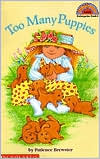
Too Many Puppies

We have a cute little book about a girl with a dog who has a litter of puppies. The puppies are adorable and cuddly and the girl's mom shouldn't make her give away the puppies! She is going to keep all the puppies.

But then the puppies start to get bigger, more rambunctious, and more trouble than they're worth. They take up all the girl's time and space. Puppies are a hassle! Perhaps she should give away all the puppies.

I am that girl. Except I don't have too many puppies. I have too many party games. They are taking over my life. It seems they are forever spread out upon the table demanding attention. My poor strategy board game collection sits there: sad, lonely, and ignored upon my game shelf.

Dominion takes it pretty well, being young himself. He sits there looking dejected, not making a sound.

El Grande is a little tougher and is used to standing up for himself (after all he is old enough to have a decennial edition, and he's an award winner), so he puffs up his chest and tries a demand: "Play me!"

"SILENCE!" Shrieks Wits and Wagers. "Do you think we care about you? You could be on Ebay in 10 seconds flat!" El Grande whimpers and backs down. The rest of the games simply cower silently in the corner.

Somebody help. I have too many party games.

Sunday, March 15, 2009

Fury of Dracula: First Plays

I played Fury of Dracula twice yesterday.

Our first was a learning game between the Mrs. and I. She had read about half of the rulebook and I had finished it, but since Fury is on the heavier side I knew the game demanded a play between the two of us before introducing it to new players. Since I had read the rules more thoroughly I decided to play Dracula and consult the rulebook, and the Mrs. controlled the four hunters. We both had our hands full between my immersion in the rulebook and the Mrs. playing all four hunter roles (which is a lot of work for a first time player!) Our game covered the majority of the rules, although I never went to sea and we only drew a fraction of the event deck. Victory went to the hunters.

James and Karin came over for dinner and games last night and we started off with Fury of Dracula. I took on the Dracula role once again, the Mrs. played Lord Godalming and Dr. Seward, Karin Dr. Van Helsing, and James Mina Harker. We were a little worried that the game would be too difficult to teach especially because we had only played through once, but it really wasn't too bad. Helping with this was the game's semi-cooperative nature so the Mrs. could guide the other players throughout much of the game helping everyone to understand better. We didn't explain going to sea or Dracula's special powers, or the resolve track, or combat until each of those came up during the game, which simplified the pregame explanation considerably.

I felt like I made some excellent decisions as Dracula, but the hunters kept finding me through well-timed event cards and I was never really able to get any separation from them, even with going to sea twice during the game. I was two turns from maturing a new vampire and thus advancing the vampire track to six for the victory when Mina Harker, with the hunters' last chance to catch me, took a train to my locale (during the day!) and successfully staked me on two consecutive rounds of combat. Oh the humanity!

The game probably took us between 2 1/2 and 3 hours to play, which did feel a little long. There are a lot of unique event and item cards in the game that need to be reviewed when drawn and again every turn to make sure they are played at an opportune time. During future plays when we are more familiar with the cards and options each turn Fury should play a bit more quickly. Everyone did seem to have a good time, and Fury of Dracula will definitely see future plays with the same group.

We ended the evening with a couple quick games of Wits and Wagers which was fun as always.

Saturday, March 14, 2009

Better as a Video Game?

Recently I've heard a sentiment mentioned several times: 'This board game would be better as a video game." What features in a board game would lead someone to feel this way? I recall several particular points here, and I'll cover them over a short series of posts.

Breaking News: Video Gamer Reviews Board Game!

I read a review of Tide of Iron (a tactical war simulation game) on Amazon.com that stated:

"If this game was published in the 70s or 80s it would have been groundbreaking and would have been amazing. As it is, computer games already do what this game tries to do."

According to this reviewer video and board games don't take up separate gaming territory: if a type of game has been well executed in video format, he would see no reason why a similar game would have any reason to exist in tabletop form. He continues:

"Fundamentally, as a board game you need to read and learn the rules to implement the mechanics of the game, whereas a computer game does all the mechanics automatically and allows intuitive player learning."

To me this exposes the poster as a gamer that has a strong bias toward video games in general. From his perspective probably 99% of board games would have absolutely no reason to exist, since what mechanic in a board game wouldn't be more easily implemented in a computer version? Candyland, for example, could be entirely played without any players at all! The computer could shuffle the cards, draw one each turn for each player, and move the pieces. Certainly this is much easier than dealing with the hassle of actually using the mechanics of the game. 'Candyland is a terrible example!' you might say, and I thought so too at first, since who wants to play Candyland? But maybe it is a good example because this is a game in one of the simplest forms possible and thus emphasizes some of the essential differences between video and board games.

What reason would anyone have to play Candyland except to 1. teach some basic game mechanics to a young child, or 2. interact face-to-face with your kids? Both of these reasons are entirely negated by the computer version. Video games skip the mechanics and remove the personal interaction.

Who Runs the Program?

We can think of a game's execution as a program. With video games the program is run almost entirely by the computer. The computer knows the rules and mechanics and runs the majority of the program in a quick and efficient manner. The only input required of the player(s) is the essential participant contribution to any game: the player decisions. Sure, a video game may require a player to click on a picture of dice to effectively "roll them" in the game, but really this is just the computer awaiting that player to tell it to continue. The player has no impact on the game at such a point, he merely gives the computer permission to generate a random number ("roll the dice").

On the other hand, during a board game session the program is run entirely by the players. The rules and mechanics are all laid out in the rules and the components of the game, but it is up to the players to learn and execute them. A video game lets players mentally skip over much of the nuts and bolts of game execution, whereas a board game requires players to be much more active participants. A video gamer may insist that this crucial difference allows him to more fully concentrate on the important part of the game: the actual decisions that lead to winning or losing. A board gamer might say that being completely involved with the game's execution leads to an experience with more weight and depth.

Who Builds the House: the Man with the Plans, or the Man with the Hammer?

From my perspective any cerebral activity would become a more full experience by adding a physical element. Imagine instructing someone on how to build a house. You give the orders about what materials to acquire, what tools to use, and how to proceed with construction. Such a job successfully completed would certainly give you satisfaction since your decisions were responsible for that success. Now imagine making those same decisions but also performing much of the physical labor. In this case the job may have been more of a hassle because you had to physically build the house rather than only supervise, but it also would have led to an additional level of satisfaction with the completed project. To me this describes some of richness of experience gained from playing a board game rather than a video game. Yes, the decisions are the essential part of the game, but the execution of the mechanics provides that extra bit of satisfaction.

Is this mostly a case of preference? Absolutely. The video gamer would emphasize the hassle side of the mechanics, the board gamer the richness of experience.

More examples and analysis to come...

Monday, March 9, 2009

Gaming weekend: North Star party games

The family and I were in Syracuse this weekend visiting my sister-in-law and her boyfriend. We picked up copies of Wits & Wagers and Sorry! Sliders at the Target. I had been somewhat shocked that none of our local Walmart stores carried Sliders, it being a mass-market game and all.

We spent lots of time playing board games during our visit, although the vast majority consisted of the two North Star party games in my collection.

Say Anything (3 plays)

We gave this one another try, and for the most part it was a lot of fun. The four of us took our answers a little less seriously than our group had on Friday night, and we did a great job of playing the game briskly. It is possible that Say Anything was more fun this time because the players knew each other a little more and could play off that fact to a greater extent. Perhaps the game can be just as fun with new friends, but we will have to wait and see.

Wits & Wagers (4 plays)

Though I did enjoy our plays of Say Anything, I had even more fun with Wits & Wagers! Instead of answering opinion questions like Say Anything, in Wits & Wagers players answer trivia questions. After everyone has written their guess on their personal dry-erase board, each player bets on which answer is closest to the correct one. I think I found this title to be more fun than the other because the winners of each question are determined by some definite answer and not just the opinion of the current player. Like Say Anything, Wits & Wagers needs to be fast paced to be fun, but this one plays quickly by design due to the 30-second timer used during each answer phase and each betting phase. We played this with four players, but I can see it being even more fun with a full complement of seven (or even more if you play teams).

Pandemic
(1 play)

Our play of Pandemic was one of the most tense I've played thus far. Perhaps 3/4 through the player deck we only had one cure and the blue disease was on the verge of overwhelming Europe completely. For a few nervous moments we felt the game was simply out of hand and victory was impossible. A few smart decisions and a heap of luck later, however, we emerged victorious, albeit with seven total outbreaks and a precious few cards remaining.

Sorry Sliders (3 plays?)

Although it wasn't the star of the weekend we did set up Sorry! Sliders and had some fun with it. I think it will be a very enjoyable game in the right circumstances, especially at a party featuring some alcohol. Sorry! Sliders seems to be a fast paced and well designed dexterity game, entertaining for children and adults alike.

Overall the weekend was lots of fun. I only wish we'd played more strategy games, as I'd brought both Dominion and El Grande. Maybe next time...